Electric Himalayans, Hydrogen Kawasakis and an $80,000 MV – Oh My!

This week, we’ve got a plethora of brands slowly opening up their offerings in anticipation of the fall season:

  • Royal Enfield has released coverage of their electric Himalayan in North India via social media, proving the machine is on the way.

  • Kawasaki’s hydrogen motorcycle is back as “Mission H24,” making another appearance in Europe.

  • KTM’s new models are rolling out globally, with the brand working to stay transparent about model debut timelines.

  • MV Agusta reclaims its space in the market as a privately-owned marque with the release of the ultra-premium 1000 Ago.

Let’s dive into the highlights.

Upcoming Models: Royal Enfield’s Electric Himalayan

Footage from North India Confirms the Incoming EV

Royal Enfield is ramping up efforts with its electric Himalayan, known as the Him-E. Recent footage shows the machine in testing through the mountainous Ladakh region, alongside the company’s design chief and CEO—suggesting the project is nearing a significant milestone.

Details so far:

  • Larger 21-inch front wheel and aggressive knobby tires

  • One-piece seat, no visible fuel tank—typical for an EV platform

  • Twin battery packs housed in a central trellis-style frame

  • External and internal cooling fins for thermal management

Expect the internal combustion twin-cylinder Himalayan to launch for the 2026 model year, with the electric variant likely seeing updates and possibly a release between late this year and next.

The Hydrogen Hype: Kawasaki’s “Mission H24” Returns

Hydrogen-Powered Superbike Demonstrated in Europe

Kawasaki continues to pursue alternative energy with its hydrogen combustion motorcycle, a product of the HySE (Hydrogen Small mobility & Engine technology Association) partnership. The machine, based on a supercharged Ninja platform, uses hydrogen stored in rear-mounted tanks.

Key points:

  • Virtually zero emissions, only water vapor

  • Developed for high-performance applications where battery range is limited

  • Recent demonstration lap took place at a European endurance event

This approach offers a promising alternative to battery-electric motorcycles, especially where long-range and quick refueling are crucial.

KTM: 2025 Models Rolling Out Now

Models Include: 390 Enduro R, 390 Adventure R, 390 SMC R

KTM is launching its updated lineup with clear scheduling by region. Here’s a breakdown of when to expect each model:

  • KTM 390 SMC R:

    • May: North America, Asia

    • June–August: Europe, UK, South Africa, Oceania

  • KTM 390 Enduro R:

    • May: North America, Asia

    • June–August: Europe, UK, South Africa, Oceania

  • KTM 390 Adventure R:

    • May–June: North America, Asia

    • July–August: Europe, UK, South Africa, Oceania

  • KTM 125 SMC R & Enduro R:

    • July: Europe, UK, Asia

  • KTM 390 Adventure X:

    • May–August rollout across all major global regions

Despite past financial bumps, KTM appears committed to delivering these bikes with transparency and global coordination.

MV Agusta Rises Again with the SuperVeloce 1000 Ago

Limited to 83 Units Globally – Honoring Giacomo Agostini

To mark its 80th anniversary, MV Agusta unveils the Superveloce 1000 Ago—a jaw-dropping tribute to legendary racer Giacomo Agostini. The bike showcases:

  • Full carbon fiber bodywork in Fire Red Matt and Magnum Silver Matt

  • Four-cylinder inline engine with race-tuned electronics

  • Öhlins electronic suspension and Brembo brakes

  • 5-year factory warranty

  • Optional racing suit and helmet inspired by Ago’s gear

Each bike is signed by Agostini himself, with the $80,098 MSRP reflecting both exclusivity and heritage.

Final Thoughts

From Royal Enfield’s rugged EV testing to Kawasaki’s hydrogen combustion experiments, and from KTM’s steady global rollout to MV Agusta’s elite collectible machine, this week’s news confirms one thing: the motorcycle world is evolving fast—and diversely.

Whether you’re a trail-loving adventurer, an eco-minded urban commuter, or a high-end collector, the horizon is buzzing with potential.

Media sourced from Cycle World, Kawasaki, KTM, and MV Agusta.

Motorcycle Roadside Assistance: A Guide for Everyday Riders

magine being miles away from home on your motorcycle, with a flat tire or a dead battery leaving you stranded. For riders, such situations are more than just inconvenient; they can be downright stressful and potentially unsafe. This is why having a reliable motorcycle roadside assistance service is essential for peace of mind and safety on the road.

Whether you’re a daily commuter, an avid long-distance rider, or someone who simply enjoys weekend rides, understanding the value of roadside assistance can make all the difference. Here, we’ll cover common roadside issues, explain the services offered, guide you on choosing the right plan, and highlight the benefits of staying prepared.

Common Motorcycle Roadside Assistance Needs for Riders

Motorcycles are incredible vehicles, but they’re also susceptible to unique challenges when out on the road. Several common issues can leave you stuck in an unexpected roadside emergency:

  • Flat Tires: Punctures or tire damage can bring your ride to a halt, especially if you don’t have the tools or expertise to handle a repair on the spot. Unlike cars, motorcycles do not carry spare tires, making roadside assistance essential.

  • Dead Batteries: Motorcycle batteries are smaller than car batteries and can drain more quickly, especially if you’ve accidentally left the lights on or your battery is nearing the end of its life.

  • Fuel Shortages: Running out of fuel seems like a simple problem, but it can feel daunting if you’re in an unfamiliar area or far from the nearest gas station.

  • Mechanical Failures: From engine trouble to issues with chains and belts, mechanical failures can leave you stranded without options. A quick towing service might be necessary to get your bike to the nearest repair shop.

  • Lockouts or Lost Keys: Yes, motorcycle lockouts happen too! Riders often find themselves unable to start their bike due to misplaced or damaged keys.

These scenarios highlight the crucial need for a dependable motorcycle roadside assistance plan.

Services Covered in Motorcycle Roadside Assistance

Most motorcycle roadside assistance services provide a comprehensive range of solutions tailored to the unique needs of motorcycle riders:

  • Towing Services: Motorbike towing is a key feature of any roadside assistance plan. Should your bike break down, a professional towing service can transport it safely to a garage or your preferred destination.

  • Fuel Delivery: Ran out of gas? A roadside assistance provider can deliver fuel directly to your location, so you can get moving again without stress.

  • Battery Boost or Replacement: Dead battery? Many plans include jump-start services or even emergency battery replacement to get you back on the road.

  • Flat Tire Assistance: Roadside services often include fixing a flat tire or transporting your bike to a nearby repair shop if necessary.

  • Lockout Support: If you’ve lost your keys or locked them in a storage compartment, assistance teams can help you gain access.

  • Other Emergency Assistance: Additional coverage may include services like extracting your bike from difficult terrains, emergency repairs, or providing directions to nearby facilities in case of an emergency.

How to Choose the Right Provider for Motorcycle Roadside Assistance

With many options available, it’s important to carefully evaluate providers before selecting a plan. Consider these key factors:

  • 24/7 Availability: Roadside emergencies don’t keep a schedule, so choose a plan that operates around the clock.

  • Specialized Expertise: Ensure the provider has technicians trained in motorcycle-specific mechanics and towing.

  • Coverage Area: Confirm the service covers the areas you ride in, whether locally or across multiple states.

  • Pricing and Flexibility: Compare plans to find one that fits your budget. Some offer pay-per-use while others provide annual subscriptions.

  • Response Time: Fast dispatch and service times can make a huge difference when stranded.

Why Motorcycle Roadside Assistance is Worth It

Investing in a motorcycle roadside assistance plan brings multiple benefits:

  • Cost Savings: Avoid expensive out-of-pocket costs for towing, repairs, or replacements.

  • Safety and Peace of Mind: Knowing help is a phone call away reduces stress, especially in remote locations.

  • Convenience: Skip the hassle of trying to fix complex issues on your own with professional support.

  • Extended Trip Confidence: Long-distance riders can enjoy the journey without constant worry.

  • Professional Service: Trained technicians handle your motorcycle with the care it deserves.

Frequent Questions About Motorcycle Roadside Assistance

  • What does motorcycle roadside assistance cover?
    Typically towing, fuel delivery, battery jump-starts, flat tire support, and lockout assistance.

  • How quickly can I expect help to arrive?
    Response times vary, but many providers aim for dispatch within 30 to 60 minutes.

  • Is my motorcycle eligible for roadside assistance?
    Most standard motorcycles are covered, but check with your provider for restrictions.

  • What should I do while waiting for assistance?
    Ensure your safety first—move to a safe spot if possible, turn on hazard lights, and stay visible.

  • Can roadside assistance fix flat tires?
    Some providers offer on-site repairs; others may tow your motorcycle to a shop.

  • Are there restrictions on the type of motorcycles covered?
    Coverage can vary; confirm eligibility for custom or specialized bikes.

  • How is motorcycle roadside assistance different from car roadside assistance?
    Motorcycle plans are tailored with specialized towing and repair services suited for two-wheeled vehicles.

Stay Prepared for the Road Ahead

Motorcycling is all about freedom and adventure, but unexpected breakdowns can take the joy out of any ride. A motorcycle roadside assistance plan ensures you’re protected wherever the road takes you. From towing to tire repairs, it combines convenience, safety, and cost savings.

Don’t wait until you’re stranded to take action. Invest in a reliable roadside assistance plan that provides 24/7 support and professional help whenever you need it.

Master the Art of Metered Parking Downtown

Navigating downtown can feel like a chore—not to mention the added stress of finding metered parking, understanding payment methods, and avoiding tickets. Whether you’re heading to a game, grabbing dinner, or commuting to work, metered parking is often a necessary part of city life. But don’t worry! This guide breaks it all down for you, offering practical tips to make your trip stress-free.

From finding spots quickly to understanding local regulations, we’ve got everything you need to know so you can focus on enjoying your time—not stressing over parking violations.

Understanding Parking Meters

Metered parking is common in busy areas with high demand. Here’s how they work and what you should know about payment and enforcement:

Payment Options

  • Coins: Classic yet reliable. Always good to have some quarters on hand for older meters.

  • Cards: Most meters now accept debit and credit cards—just follow the prompts on the screen.

  • Parking Apps: Many areas support apps like ParkMobile, offering a seamless, contactless way to pay and monitor your time.

Operating Hours and Rates

Meters typically operate from 7 AM to 11 PM, Monday through Saturday, but this may vary by zone. Rate updates happen occasionally, so always check the meter for current pricing. On special event days or during street cleaning, stricter enforcement may apply.

Watch the Signs

Don’t assume! Read all posted signage around a parking meter. Time limits, rush hour rules, and temporary restrictions are all important to avoid violations—or worse, a towed vehicle.

Tips for Finding Parking Spots

Finding parking downtown during busy times can be frustrating. Use these strategies to increase your chances:

  • Use Parking Apps: Apps like ParkMobile or SpotAngels can help you find, reserve, and even extend your parking remotely.

  • Know Peak Hours: Avoid high-traffic times like weekday lunch hours or before/after large events.

  • Check Road Conditions: Construction or closures can limit available spaces—check local traffic info ahead of time.

Paying for Parking: Step-by-Step

Confused by parking meters? Here’s a quick guide:

Coins or Card Payments

  1. Insert coins or swipe your card at the meter.

  2. Follow the on-screen instructions to set your parking duration.

  3. Confirm your payment and print your receipt if needed.

Using a Parking App

  1. Open the app and sign in.

  2. Enter the meter’s zone number, usually displayed on signage.

  3. Set your desired time and pay digitally.

  4. Get notified when your time is about to expire and extend from your phone if needed.

This method eliminates the hassle of running back to feed the meter.

Avoiding Parking Tickets

A parking ticket can ruin your day. Here’s how to avoid one:

  • Track Your Time: Set a phone alarm or rely on app notifications to avoid overstaying.

  • Read Every Sign: Some restrictions aren’t just about time—they may prohibit parking during events or street cleaning.

  • Stay Clear of Prohibited Zones: Double-check curb markings and special-use signs.

What If You Get a Ticket?

Mistakes happen. If you receive a ticket, pay or dispute it as soon as possible to avoid late fees. Most cities allow online payment through municipal websites.

Free Parking Options

You might not always have to pay for parking if you plan ahead.

  • Free Meter Days: Public holidays and special local events may come with free parking. Check official sources for updates.

  • Residential Areas: Look for nearby streets without permit requirements. Just be sure to verify any posted signage.

  • Customer Parking: Some businesses offer free parking while you’re on-site—always ask!

  • Alternative Transport: Consider carpooling, biking, or using a ride-share service if parking seems like too much of a hassle.

If Your Car Gets Towed

It’s frustrating, but manageable. Here’s what to do:

  1. Locate Your Vehicle: Use the city’s official online vehicle locator tool to find where your car is being held.

  2. Know the Fees: Expect a base tow fee and additional daily storage charges. Picking up your car quickly helps minimize costs.

  3. Bring Documents: You’ll need valid ID and proof of ownership (like registration or title).

  4. Have the Right Payment: Some impounds may only take cash. Verify ahead so you’re not caught off guard.

Acting quickly can save you time and additional expense.

Key Takeaways

Metered parking doesn’t have to be overwhelming. By understanding how the system works, using parking apps, and reading signage closely, you can avoid violations and enjoy your day without interrupt

Your Complete Guide to Choosing the Right Towing Equipment

Personal towing is growing in popularity across Indiana. Whether you’re hauling a boat to Lake Monroe, towing a pop-up camper to Brown County State Park, or moving equipment for a home project, setting up a safe and legal towing system is more important than ever.

With the right equipment and knowledge, Indiana’s roads—and weekend adventures—are wide open. This guide will walk you through how to choose the right towing equipment, follow Indiana-specific regulations, and stay safe behind the wheel.

Understanding the Basics of Towing Equipment

Before you shop for towing gear, it’s helpful to understand a few key terms:

  • Tongue Weight (TW): The downward force your trailer applies to the hitch.

  • Towing Capacity: The maximum weight your vehicle can tow safely, as specified by the manufacturer.

  • Gross Vehicle Weight Rating (GVWR): The total weight of your vehicle when fully loaded with cargo and passengers.

  • Trailer Towing: The act of pulling a trailer with a vehicle using a hitch.

  • Tow Hitch: A device installed on your vehicle that connects to and supports the trailer.

These terms form the foundation for selecting the proper gear for your towing needs.

Common Towing Equipment You May Need

A well-prepared towing setup typically includes the following components:

1. Ball Mounts

These connect your tow hitch to the trailer. Adjustable models make it easier to tow different types of trailers with varying tongue heights.

2. Tow Hitches

A strong, properly installed hitch is essential. For heavier loads, consider a weight-distributing hitch, which helps balance the load between the vehicle and trailer.

3. Safety Chains

Legally required in Indiana, safety chains act as a backup if the hitch connection fails. Always cross the chains under the hitch and attach them securely.

4. Lighting and Electrical Systems

Indiana law mandates functional lights on trailers. Brake lights, turn signals, and running lights must all work correctly. Reliable wiring harnesses and controllers from brands like Tekonsha and Hopkins are recommended.

How to Match Equipment to Your Vehicle and Trailer

Here’s how to ensure your gear matches your setup:

  • Verify Your Vehicle’s Towing Capacity: This can be found in the owner’s manual or manufacturer’s website.

  • Know Your Trailer’s GVWR: This helps ensure you stay within the vehicle’s limits.

  • Use the Correct Ball Size: Common sizes include 1-7/8″, 2″, and 2-5/16″. Choose the right match for your trailer coupler.

  • Adjust for Your Activity: Different types of towing (e.g., boat trailers vs. cargo haulers) may require different hitch strengths and accessories.

Example: If you’re towing a jet ski or fishing boat, your equipment must be rated above the total weight of the loaded trailer and include functioning lighting, brake control, and safety chains.


Towing Laws and Requirements in Indiana

Indiana has specific towing laws designed to keep drivers and roadways safe. Here are some important regulations to follow:

  • Braking Systems: Required for trailers weighing over 3,000 lbs.

  • Safety Chains: Mandatory on all trailers.

  • Lighting Requirements: Trailers must have working taillights, brake lights, and turn signals.

  • Trailer Width: Cannot exceed 8 feet 6 inches without a special permit.

  • Speed Limits: There are no specific lower limits for vehicles towing trailers in Indiana—follow posted limits and adjust for safety.

For the most current information, refer to the Indiana Bureau of Motor Vehicles (BMV).

Towing Safety Tips

Personal towing can be simple and safe if you’re prepared. Follow these best practices:

  • Practice First: Drive with your trailer in an open area to get comfortable turning, stopping, and backing up.

  • Even Load Distribution: Prevent trailer sway by loading cargo evenly.

  • Check Equipment Before Every Trip: Inspect your hitch, ball mount, chains, and lighting for signs of wear or malfunction.

  • Drive Cautiously: Allow extra braking distance and take turns slowly.

  • Stay Weather-Aware: Wet or windy conditions can increase the risk of trailer sway.

Routine Maintenance for Towing Gear

Towing equipment needs regular attention to stay safe and functional:

  • Inspect Components Frequently: Look for corrosion, cracks, or loose bolts on your hitch and trailer.

  • Test Your Lights: Ensure all trailer lights are working properly before every trip.

  • Grease Moving Parts: Lubricate the hitch ball and coupler to reduce wear and improve operation.

  • Replace Weak Chains: Don’t take chances with rusty or undersized safety chains.

When to Call a Professional Towing Service

Even with the best planning, there are situations where professional assistance is the safest option. Call a certified towing provider if:

  • You experience a mechanical breakdown.

  • Your trailer is too large or heavy for your current vehicle.

  • You’re unsure how to safely hook up or operate your trailer setup.

Professionals are trained to manage towing scenarios efficiently and safely, especially in emergencies or when dealing with oversized equipment.

Final Thoughts

Whether you’re hauling gear for fun or necessity, towing opens up new possibilities for travel and adventure in Indiana. Choosing the right equipment, following state laws, and staying safety-minded will ensure a smooth ride every time.

When in doubt, reach out to a qualified towing expert who can guide you through setup, safety, and gear selection—so you can hit the road with total confidence.

10 Data-Backed Mental Wellness Activities for Employees (That Truly Work)

More and more companies are investing in mental wellness activities for employees, but with limited time, budgets, and resources, how can you know which initiatives are truly effective? The answer lies in the data.

We focus on initiatives that are proven to not only improve employee mental wellness but also deliver measurable benefits to the companies that implement them. Evidence-based wellness is crucial to program success and employee satisfaction, especially when you consider that an American Psychological Association survey found that 92% of workers say it’s important to work for an organization that supports their emotional and psychological well-being.

With that in mind, here are ten data-driven mental wellness activities for employees, each proven to make a meaningful impact.

10 Data-Backed Mental Wellness Activities for Employees
1. On-Site or Virtual Meditation

Meditation is a well-established strategy for enhancing mental wellness. In one example, more than 13,000 Aetna employees participated in yoga and meditation classes (Fierce Healthcare). The results were impressive, with employees reporting an average:

28% reduction in stress
20% improvement in sleep quality
19% decrease in pain

These benefits translated to an average productivity gain of 62 minutes per week, worth about $3,000 per employee, per year.

Activity Idea: Hold “mindfulness minutes” throughout the day. When a timer goes off, everyone pauses what they’re doing, sits quietly, and meditates for five minutes to decompress before returning to work.

2. Digital Detox

“Digital detox” might sound like a buzzword, but it delivers real benefits. In fact, Vorecol reports that:

University of Penn researchers found that limiting social media to 30 minutes per day reduces feelings of depression and loneliness, increasing overall wellbeing by 21%
The American Psychological Association says 60% of employees feel overwhelmed by digital devices, and 50% say they negatively affect mental health
Buffer “Digital Detox Days” have resulted in an 82% increase in productivity and 70% increase in job satisfaction

Activity Idea: Encourage employees to take 5 to 10 minutes of non-screen time each hour during the workday.

3. Mental Health-Themed Book Club

Social connection and peer support are essential to overall well-being, and creating opportunities for employees with shared interests to connect can pay dividends. Book clubs, for example, combine social connection with education, which can have a powerful impact on mental health while fostering friendships between peers who engage in shared learning activities.

Strong work friendships have a big impact on mental wellness. According to KPMG:

4 out of 5 employees say work friends are highly important, and 78% say they get mental health benefits from having work friends
84% of employees say it’s important for companies to facilitate interactions that foster work friendships
More than 80% say these factors are important when deciding whether to take a new job or stay at their current job

Activity Idea: Start a mental health-themed book club that fosters friendships, peer support, and meaningful conversations around mental wellness.

4. Resilience Workshops

Many employees struggle with soft skills like managing and regulating emotions, which can lead to conflict, burnout, and poor mental well-being at work. Providing tools and strategies to build resilience and effectively manage their feelings can make a meaningful difference. For example:

Resilient employees report 60% less burnout and 50% less work-related stress (meQuilibrium)
They’re also four times more likely to be happy with their jobs and 31% more engaged (meQuilibrium)
Studies have shown that emotion regulation training effectively reduces occupational stress for high-demand occupations such as critical care nurses (National Institute of Health)

These mental health activities for the workplace not only bolster individual confidence and collaboration, but they can also improve overall efficiency and productivity.

Activity Idea: Offer resilience workshops that teach employees how to manage emotions, navigate conflict, collaborate on resolutions, and build healthier work relationships.

5. No Meeting Days

Constant meetings can kill productivity and introduce unnecessary stress. MIT Sloan Management Review makes a compelling case for planning “no meeting days.”

MIT conducted a study on the effects of having one “no meeting day” and three “no meeting days” per week
When companies held one “no meeting day”, productivity increased by 35% and stress decreased by 26%
When companies held three “no- meeting days” each week, productivity soared by 73% and stress decreased by 57%

Activity Idea: Designate “no meeting days” each week to allow employees time for focused, meaningful work without distractions. Stick to them!

6. Gamify EAP Participation

Employee Assistance Programs (EAPs) provide financial support for employees to complete mental health and wellness activities on their own. However, employees don’t always take advantage of EAPs, even though Gallup found that:

32% of employees say EAPs are extremely helpful
47% say they are somewhat helpful

Activity Idea: Use gamification to encourage EAP participation. For example, you can create a “mental health bingo” card where each square represents a self-care activity supported by your EAP. Offer rewards for completing rows or entire cards.

7. Employee Recognition

It’s no secret that employees don’t always receive the recognition they deserve, and feeling underappreciated can take a real toll on mental health. Conversely, celebrating employee achievements and milestones – big and small – can have a powerful impact on mental wellness.

According to Mental Health First Aid, expressing thoughtful gratitude:

Immediately increases happiness by 10%
Reduces depressive symptoms by 35%

Activity Idea: Implement an employee recognition program that celebrates and thanks each employee individually for their achievements and contributions. This program grants employees ownership in their own recognition of peers, and has proven to be very successful and impactful for our organization.

8. Nature Exposure

Studies have shown that spending time in nature reduces anxiety, and even an outdoor view from the office can significantly boost employee mental wellness.

According to NMSFA, employees with a view of nature:

Have greater enthusiasm
Experience less frustration
Report higher life satisfaction
Enjoy better overall health

Interestingly, NMSFA also reports that those who do not have a view of nature experience greater anxiety and 23% more illnesses. Providing a view is one of the easiest mental health wellness activities organizations can offer.

Activity Idea: Create opportunities for employees to work outside or near windows with a view of the great outdoors.

9. Walking Meetings

Walking meetings are a popular way to introduce variety, movement, and even nature into the workday, but did you know that regular walking meetings can improve employee mood and overall productivity?

Moreover, two 30-minute walking meetings per week accounts for 40% of the Dept. of Health and Human Services’ recommended 150 minutes of moderate aerobic activity, adding a physical benefit to the mental health benefits of walking meetings. That makes walking meetings one of the best mental health ideas for the workplace.

Activity Idea: Schedule two walking meetings per week, a minimum of 30 minutes each. Bonus if you can walk outdoors!

10. Volunteerism

Many companies offer volunteer days where employees can take time off to support causes they believe in, either individually or as part of an organized group effort.

These efforts don’t just help the community – studies show that 75% of adults feel physically better after volunteering (United Health Group). Volunteering also offers significant mental and emotional benefits:

93% improved mood
79% lower stress
88% increased self-esteem

Activity Idea: Organize group volunteer opportunities for employees to give back together and strengthen team bonds in the process.

Prioritize Employee Mental Wellness Activities

If you want real results, mental wellness can’t be an afterthought – it must be a priority. Some of the most effective offerings include:

Challenges: Friendly competitions that fuel motivation and camaraderie
Habit builders: Bite-sized tasks that lead to big, long-term change
Quizzeos: Wellness-themed videos with interactive quizzes that reinforce learning
Lunch and Learns: Fun and engaging education sessions held over lunch hour

Keep in mind that flexibility is key to long-term success. Employees are more likely to engage when they can choose activities they prefer (within a framework that aligns with your corporate wellness goals).

Rewards and incentives can also be powerful motivators. RAND found that wellness program participation hovers around 20% without incentives, but doubles to 40% when rewards are offered.

That said, extrinsic motivators can often be enough to encourage participation. One Aetna challenge that had no rewards still earned participation from 8,000 employees. The participants reported an 18% reduction in stress, and 97% of them recommended the program.

Whether you offer incentives or not, understand that mental wellness activities for employees shouldn’t be one-off tasks. Instead, they should be part of a comprehensive program that consistently prioritizes mental wellness. Kickstart your program by finding inspiration in the ten mental wellness activities for employees listed here.

Mental Wellness Activities That Work
When employees are mentally well, everything improves – engagement, retention, productivity, and company culture.

AI in Corporate Wellness: 15 Ways AI is Revolutionizing Wellness

AI in corporate wellness is the future – and it’s here now. The timing couldn’t be better, as we’re seeing a shift from company-level-only programming to a preference for total wellness platforms that deliver both company-level and individualized programming.

AI helps companies develop highly personalized wellness programs, and that’s just the beginning. It can also assist with program administration, enhancing effectiveness by boosting employee productivity and satisfaction, reducing turnover, and lowering costs – all key benefits of a well-structured wellness program.

However, AI also brings challenges such as overreliance, privacy and data security concerns, and the potential for algorithmic bias. Here are 15 ways AI is transforming corporate wellness, plus how to address the challenges of AI in the wellness industry.

15 Ways AI Can Enhance Corporate Wellness

AI can enhance corporate wellness across all six pillars – physical, mental and emotional, nutritional, occupational, financial, and social – as well as provide administrative support.

Physical Wellness
1. Early Detection

AI can analyze individual health markers to predict disease, enabling life-saving early detection. For example, AI could monitor heart rate, body temperature, and sleep patterns to identify potential health issues.

2. AI Coaching

AI can deliver personalized health coaching tailored to each employee’s unique needs and goals. For example, it could help an employee recovering from an injury by designing a safe and effective workout plan to regain strength.

3. Real-Time Health Tracking and Holistic Monitoring

AI seamlessly integrates with wearables for real-time health tracking and holistic monitoring. For example, it can analyze an employee’s workouts and recovery times, then recommend training regimens to optimize fitness.

Fitness tracking also benefits employers. One corporation saw a 25% decrease in employee sick days after implementing AI-driven fitness tracking (Redress Compliance).

Mental and Emotional Wellness
4. AI Therapist Chatbot

AI chatbots can serve as virtual therapists, helping employees cope with various issues and develop personalized strategies for success. In addition, AI wellness apps can analyze employee language in emails or wellness campaigns to identify subtle signs of stress, then provide a series of guided questions that can help individuals recognize imbalances and, if needed, recommend professional support.

In fact, an AI chatbot could be more effective than in-person therapy: 68% of people would rather talk to a robot than their manager about stress and anxiety at work, and 80% are open to AI therapy (Oracle). Moreover, people who use AI therapy chatbots experience 64% greater reduction in depression symptoms (World Economic Forum).

5. Individualized Guided Meditation

AI can provide guided meditation sessions tailored to each employee’s specific needs, whether for stress relief, focus, or better sleep. It can even analyze mood, stress levels, and previous sessions to adapt in real-time for a more effective and customized experience.

6. Real-Time Stress Reduction

AI can monitor for signs of stress and intervene in real-time. For example, AI-powered tools for employee wellness could notice when an employee’s tone in emails suggests frustration, then it could recommend a brief guided meditation session to help them reset.

AI in wellness could even save lives. A study found that an AI algorithm could predict suicide attempts within a week with 92% accuracy and within two years with 85% accuracy (National Library of Medicine).

Nutritional Wellness
7. Diet Analysis

AI can help employees analyze their diets to identify good habits and areas that could use improvement.

For example, employees could upload meal photos to an AI-powered chatbot. The chatbot could track their dietary habits and identify strengths (such as eating plenty of leafy greens) and weaknesses (such as too much processed food). It could then recommend simple adjustments for healthier nutrition.

8. Meal Plans and Schedules

AI can also create individualized meal plans, acting as a virtual nutritionist. This is particularly helpful for those with dietary restrictions and allergies.

For example, an employee who just learned their child has a food allergy could use AI to meal plan safely as they learn more about the allergy.

Occupational Wellness
9. Burnout Prevention

AI can monitor employee health markers and use predictive analytics to identify early signs of employee burnouts. For example, AI can analyze work hours, task completion time, communication and sentiment, physiological factors such as heart rate variability to predict burnout and intervene.

One company used AI to monitor employee stress, then intervened to reduce burnout rates by 30% (Redress Compliance).

10. Task Prioritization and Scheduling Assistance

AI can also help employees manage their schedules, helping to organize their workdays without overwhelming them.

For example, an AI-driven calendar assistant could analyze an employee’s workload and automatically schedule work sessions, meetings, and breaks to boost efficiency and productivity without work overload.

Financial Wellness
11. Financial Goal Planning

AI platforms can assist with financial goal planning, helping employees create individualized and realistic goals to increase savings, reduce debt, and plan for retirement.

It can also help employees ensure they’re maximizing their benefits packages. For example, an AI financial wellness platform could notify employees if they’re missing out on an employer match for retirement contributions.

12. Budgeting

AI can help employees create budgets that achieve their goals. For example, AI can analyze employee income and expenses, debts, savings goals, and retirement goals to ensure they’re putting enough money back for retirement.

Social Wellness
13. Foster Social Connections at Work

AI can serve as a personal communication coach, suggesting ways to word emails more diplomatically to defuse or prevent conflict (Deloitte). It can also match colleagues for mentorship or coffee chats by analyzing interests, roles, and goals.

14. Identify Social Withdrawal

AI can monitor how employees interact and collaborate to identify signs of social isolation, then prompt administrators to intervene (Deloitte).

For example, an AI wellness app might flag when an employee stops participating in team meetings and collaboration tools, then alert a manager to check in with the employee.

Administrative Support
15. Administrative Support

AI can provide interactive support for wellness program administrators. For example, it can walk them through setup, explain how various tools are used, or help them find and use program resources.

AI can also be used for engagement tracking and as a recommendation engine. It can track benefits usage, engagement rates, popular incentives, and user feedback to help administrators design programs that continually meet company goals and needs, ultimately improving wellness initiatives and outcomes over time.

Challenges of AI in Corporate Wellness

Here are three challenges companies must address when introducing AI into their wellness programs.

1. Overreliance on AI

AI should be a tool that supports your wellness efforts, not replaces them. You still need humans to design programming, make important decisions, and to keep employees engaged. Thus, it’s important to avoid overreliance when implementing AI for wellness companies.

2. Algorithm Bias

Make sure your algorithm doesn’t have biases that could negatively impact the employee experience. There are multiple ways bias can be unintentionally introduced in AI wellness platforms, including:

Training data: For example, if an AI wellness app is trained on data from younger individuals, it might not provide suitable recommendations for older adults
Underrepresented populations: For example, the algorithm might learn to recommend high intensity workouts that are effective for some populations, but not recommend low-impact workouts for others, such as people with joint pain
Measurements: For example, if an algorithm uses factors such as BMI to measure health without considering other factors such as muscle mass and metabolism
Developer bias: For example, developers could unintentionally program algorithms with their personal biases

It’s important to use diverse, representative datasets, apply fairness-aware machine learning techniques, conduct regular bias audits, follow ethical principles, allow user feedback, and – most importantly – involve human oversight for any AI wellness solution.

3. Privacy and Security

Privacy and security are paramount for AI in the wellness industry, especially when you expect employees to share personal and health information. Personal privacy, data security, and compliance (HIPAA) are critical considerations.

AI is transforming employee wellness with real-time insights, highly personalized programming, and intuitive administrative support. However, ethical implementation is crucial to ensuring these advancements truly benefit employees.

Roadside Assistance 101: When to Call a Tow Truck

Car trouble is often the last thing anyone expects during their daily commute or a long road trip. It sneaks up on you, leaving you stranded and stressed—especially if you’re far from home. Knowing when you need roadside assistance and how to handle unexpected issues can save you time, money, and frustration.

This guide covers the most common roadside emergencies, steps to take before calling for help, and what to look for in a roadside assistance service. By the end, you’ll be equipped to handle car troubles confidently and know exactly when it’s time to call a tow truck.

Common Situations for Calling a Tow Truck

Not every roadside incident requires professional help, but some situations make towing essential. Here are the most common scenarios:

Flat Tire

Flat tires are one of the most frequent reasons drivers need assistance. If you don’t have a usable spare, or lack the tools or experience to replace it, a tow truck—or mobile tire service—is your safest bet.

Locked Keys in the Car

Locking your keys inside your vehicle is more common than you think. Roadside technicians can often unlock your car without causing damage, saving time and stress.

Dead Battery

Whether your battery died from age or leaving the lights on, jump-starting your vehicle might not always be an option. Many services offer on-the-spot jump-starts or battery replacement.

Running Out of Fuel

Running out of gas can leave you stranded in an inconvenient or unsafe location. Many roadside providers will deliver a small amount of fuel to get you back on the road.

Engine Overheating

When the temperature gauge spikes or you see steam, it’s time to stop driving. Continuing with an overheated engine can cause serious damage. In this case, a tow is necessary.

Mechanical Failure

Strange noises, stalling, or gear shifting issues often point to mechanical failure. If your car won’t move safely, call for a tow to the nearest repair shop.

Stuck in a Ditch

Icy roads, rain, or unexpected curves can leave your vehicle stuck off-road. Tow trucks equipped with winching systems can safely recover your car without further damage.

Accidents

After an accident, even minor damage can compromise your vehicle’s drivability. A tow truck ensures safe transport to a repair facility.

Assessing Your Roadside Emergency

Before calling for help, take a moment to assess the situation for your safety and to better assist the towing provider:

  1. Move to Safety
    If your vehicle is still drivable, steer it to the shoulder or a safe area away from traffic. Use hazard lights immediately.

  2. Use Your Emergency Kit
    A well-stocked kit should include:

    • Reflective triangles or flares

    • Flashlight with batteries

    • Jumper cables

    • First-aid kit

    • Blanket

    • Basic tools

    • Portable phone charger

  3. Note Key Details
    Record your location using nearby landmarks, mile markers, or GPS. Also, note your vehicle’s condition and any visible damage.

  4. Call for Help
    Contact a trusted roadside service provider. Be clear and specific so they send the right assistance.

  5. Stay Safe While Waiting
    If you’re on a busy highway or in low visibility, stay inside your vehicle with your seatbelt on. Only exit the vehicle when it’s safe.

Choosing a Roadside Assistance Provider

The quality of service can vary widely, so look for these features when selecting a provider:

  • 24/7 Availability: Car trouble can strike at any time. Choose a provider that’s always on call.

  • Fast Response Times: Time matters—especially in unsafe or remote locations.

  • Wide Service Coverage: Ensure they cover both urban and rural routes.

  • Transparent Pricing: Hidden fees can turn a small problem into a big one.

  • Qualified Technicians: Experienced staff can resolve more issues on-site.

  • Positive Reviews: Look for customer feedback on reliability and professionalism.

  • Added Benefits: Some plans include perks like member discounts, emergency lodging, or trip reimbursement.

Reliable roadside assistance brings peace of mind, especially when driving long distances or during harsh weather.

In Summary

Car trouble is unpredictable, but how you handle it doesn’t have to be. Understanding the common reasons to call a tow truck—and having a reliable roadside assistance plan—can help you stay calm, safe, and prepared in any situation.

From flat tires to engine trouble or post-accident recovery, knowing when and how to act makes all the difference. Keep an emergency kit in your car, research a dependable provider, and drive with the confidence that help is just a call away when you need it most.

Aircela Pulls Fuel Out of Thin Air, Norton Preps Four Projects for 2026

Aircela Pulls Fuel Out of Thin Air, Norton Preps Four Projects for 2026

This week, we’ve got some really exciting bits of news from all corners of our industry:

Ural’s punting out a “Ural Neo 500,” estimated to be their most affordable sidecar yet – and it’s coming to America!
Kawasaki’s facing a recall affecting the crankcase bolts on over 17,000 motorcycles, with an estimated 1% affected.
Norton is giving heavy-hitter vibes with six projects lined up for future debuts – four of which are slotted for 2026.
Aircela, a New York-based startup company, is working toward the production of a fuel generator that can make chemically identical synthetic fuel out of our air.

Let’s start with Ural’s new number, as we haven’t chatted about Ural in a while!

Ural’s New Sidecar is Coming to America!

A view of a Ural sidecar. Media sourced from Ural.

Neo 500 to be Ural’s Most Affordable Sidecar Yet

The last time that we covered Ural, the brand was moving from Russia to Kazakhstan due to the Russo-Ukraine war. Ural’s residual evolution has since carried a refreshing of their beloved, horizontally-opposed, 745cc air-cooled flat-twin heart (new camshaft, roller tappet and rocker arm mechanism with better alloying, casting, and tighter component tolerances) – and now, we can enjoy the brand’s continued up-and-ups here across the pond!

According to CycleWorld, America is getting a more budget-friendly sidecar.  Named the Neo 500, this sidecar continues to boast the brand’s storied history, which dates back as far as WW2.

We’re told that Ural’s Neo 500 celebrated a lovely debut on US soil in Ural’s Washington headquarters – a fitting thing, considering Ural has been US-based since 2002, with America currently being the company’s largest market.

But back to the Neo 500.

While production of Ural’s boxer-twin bikes is currently underway in Kazakhstan, this new Neo 500 will be manufactured in China by Yingang – an efficient choice for when companies don’t have enough internal manufacturing facilities to build an all-new, cost-effective product.

The Neo 500 doesn’t yet seem to be at the production-prototype stage, as CycleWorld tells us that the Ural 500 coming to America has yet to lock in on official specs (height, weight, componentry, etc). Since we’re getting a bike and and sidecar with Ural’s offerings, we know that the Neo500 will be less than Ural’s next model in line, currently going for $19,999 USD. Ben Purvis also estimates that the unit will be similar to the SUV500 II it’s based on, which carries a Zongshen-designed 446cc parallel-twin engine.

Power (of the bike, not the sidecar) is anticipated to be around 35hp, with a substantial 5.3-gallon fuel tank driving a purpose-built chassis with a leading-link front suspension system and further specs reminiscent of Ural’s existing 750cc boxer-twins.

The core aim for the Ural Neo 500 is rider-friendliness, as Ural is well aware that many of their future customers will be new to the sidecar world as a whole. Better still, we’re told that Ural’s aiming for this sidecar to enter US markets under $15,000 USD, which will be realized sometime mid-2026.

To get all the details on Ural Neo’s new affordable sidecar, be sure to check out the full article on CycleWorld:

Ural Neo 500 Coming To US

Total Recall: 17,792 Ninja ZX-6R Motorcycles Affected

A view of a Kawasaki ZX-6R. Media sourced from Kawasaki.

“Certain Vehicles May Lose Engine Power During Operation”

We try to post things that are more exciting than recalls around here – but every once and a while, a recall comes by that’s impossible to ignore.

If you are in possession of a MY2024- 2025 ZX636J/K (Ninja ZX-6R) Kawasaki revver, pay attention: Your bike could very well be on a new list – along with 17,791 others – labelled “DO NOT DRIVE.”

According to the NHTSA’s recent recall notice (posted here for y’all to have a gander), the affected vehicles also include the MY24 NINJA ZX-6R 40th Anniversary Edition ABS, MY24-25 Ninja ZX-6R ABS/KRT Edition ABS, and the Ninja ZX-6R/KRT Edition. The recall population covers all units produced from April 2023 through April 28, 2025, totalling 17,792 units.

Apparently, the problem is a bunch of over-torqued crankcase bolts:

“Certain vehicles may lose engine power during operation due to a seizure of the No. 5 metal crankshaft bushing [leading to certain vehicles]… losing engine power and increasing the chance of a crash”

– National Highway Traffic Safety Administration (NHTSA)

For this type of issue, we’re told that riders won’t receive any warning before this potentially severe issue arises, leading to the urgency of the recall (despite only an estimated 1% of the affected motorcycles being projected to manifest the problem).

We DO know that the letter from NHTSA has already made its way to Kawasaki HQ, though as of June 11, 2025, there is no known remedy for this issue, nor has Kawasaki yet provided a schedule for recall notifications to owners.

Bottom line, MY2024-2025 ZX636J/K (Ninja ZX-6R) Kawasaki riders are recommended not to ride until a proper repair has been completed and officially communicated by Kawasaki.

For full details on this recall and to check if your bike is affected, please refer directly to the official NHTSA safety recall report:

Part 573 Safety Recall Report 25V376

Norton Preps to Launch Four-Cylinder Superbike at EICMA

A view of a Norton Motorcycle. Media sourced from Norton.

Six Products in the Pipeline, Four of Which are Slotted for 2026

It’s high time Norton refreshed the golden years on which they sit, and what better way to do this than to capitalize on the new ownership by dropping a fresh new superbike at EICMA this year?

It’s been a rollercoaster five years for Norton, but the iconic British marque has been quietly rebuilding, and new model launches are on the horizon (along with – surprise, surprise – new movement toward international expansion).

According to CycleWorld, the Managing Director of India’s third-largest motorcycle maker – and The Norton Motorcycle Co. Limited’s new parent company – has confirmed that Norton will target France, Germany, Italy, and Spain by 2026 with an expansion that will include four new models planned for a 2026 debut. , spearheaded by a revised version of the V-4 superbike.

Venu detailed the upcoming product pipeline in as many words below:

“I think I have mentioned six products before, four of which will be available for the summer of 2026 in the four European markets of the UK plus France, Germany, Italy, and Spain (also, of course, in India)… [we will start] off with the launch of the four-cylinder superbike at EICMA and then… the remaining three products at EICMA … which will be available in the market early 2026.

They’re all in advanced stages of development.”

– Sudarshan Venu, Managing Director, TVS Motors (CycleWorld)

Currently, we are aware that Norton’s V4SV superbike doesn’t meet Euro 5+ type-approval rules, meaning that the Norton team will need to do some finagling for the soon-to-be-revised V-4 superbike, given we’re assuming it’ll carry those iconic 185 ponies. We also know Norton’s daddy is keen on smaller-displacement bikes that will soon fill out the 450cc segment of our good industry – and yes, it’s highly likely that at least one of these entry-level bikes will carry the same platform that BMW will be using for their F 450 GS.

To Venu, the blending of platforms is a clear example of what’s to come:

“I think we [first] did the single cylinder, the 310 family. Then came the EV, and now is the two-cylinder family, which BMW has shown their version [of] at last year’s EICMA. And you will see Norton and TVS versions using a similar platform in the coming months.

So that is where I think the relationship is headed.”

– Sudarshan Venu, Managing Director, TVS Motors (CycleWorld)

To be fair, Norton would have a decent machine to compete against the likes of Triumph’s Speed 400 and Scrambler 400 X, so we will be curious to see where TVS goes as they continue to march toward new project deadlines.

The future is looking bright for this historic British brand!

For all the in-depth details on Norton’s expansive future plans and new model pipeline, be sure to read the full report on CycleWorld:

Norton Planning Six New Models

Light ‘er Up: New Startup Pulls Fossil-Free Fuel from the Air

A view of the fuel generator that New-York-based startup Aircela is building for our fuel-minded industry. Media sourced from Aircela.

Meet the New York-Born Aircela Fuel Generator

I mean. We all love the idea that fuel could go from being a major contender in the weekly budget to something we can just pull out of thin air, right?

Well, we think New York-based startup Aircela must have been of a similar mind when they went ahead and created a generator that could produce genuine, pump-grade petrol using only air, water, and renewable electricity.

According to a report from Visordown, the fuel generated from Aircela’s invention is true, pump-grade gas, though the catch is that it’s a chemically identical synthetic ingredient boasting a rating of around RON 95+.

For those of you who aren’t as “fuel-nerdy” as some of my mates, those ratings position Aircela’s fuel on par with what we could consider to be “premium-grade fuel” in our industry.

“Because the fuel is made at a small scale using the methanol-to-gasoline (MTG) process, the team can fine-tune the synthesis and hydrotreating parameters to dial in specific octane levels.

A mid-range fuel typically measures around 89 to 90 AKI, and premium quality fuel is around 91 to 94 AKI.”

– Simon Hancocks (Visordown)

Since Aircela’s fuel is made by snatching CO2 and generating renewable energy, it’s effectively a carbon-neutral option that could give electric grids across the country the break they needed as infrastructure struggles to keep up with our EV-minded world.

Aircela isn’t just a garage dream, either. The company boasts support from big names like Maersk Growth and Ripple co-founder Chris Larsen, with commercial units.

On to the big question: Will production be a reality anytime soon?

A view of the fuel generator that New-York-based startup Aircela is building for our fuel-minded industry. Media sourced from Aircela.

The answer is… yes!  Units are expected to roll out by the fall of this year, though expanding after the initial launch is still an unknown for the company itself.

If Aircela’s claims hold true, the internal combustion engine might just have a much longer redline… and the future might still smell like fossils.

Or strawberries, or whatever this new stuff smells like.

For a full deep dive into Aircela’s groundbreaking fuel technology, be sure to check out the article on Visordown:

Fuel from Thin Air? New Tech Promises Fossil-Free Petrol for Motorcycles

*Media sourced from Ural Motorcycles, Kawasaki, Norton’s Facebook page, and Aircela*

The post Aircela Pulls Fuel Out of Thin Air, Norton Preps Four Projects for 2026 appeared first on webBikeWorld.

This week, we’ve got some really exciting bits of news from all corners of our industry:

Ural’s punting out a “Ural Neo 500,” estimated to be their most affordable sidecar yet – and it’s coming to America!
Kawasaki’s facing a recall affecting the crankcase bolts on over 17,000 motorcycles, with an estimated 1% affected.
Norton is giving heavy-hitter vibes with six projects lined up for future debuts – four of which are slotted for 2026.
Aircela, a New York-based startup company, is working toward the production of a fuel generator that can make chemically identical synthetic fuel out of our air.

Let’s start with Ural’s new number, as we haven’t chatted about Ural in a while!

Ural’s New Sidecar is Coming to America!

A view of a Ural sidecar. Media sourced from Ural.

Neo 500 to be Ural’s Most Affordable Sidecar Yet

The last time that we covered Ural, the brand was moving from Russia to Kazakhstan due to the Russo-Ukraine war. Ural’s residual evolution has since carried a refreshing of their beloved, horizontally-opposed, 745cc air-cooled flat-twin heart (new camshaft, roller tappet and rocker arm mechanism with better alloying, casting, and tighter component tolerances) – and now, we can enjoy the brand’s continued up-and-ups here across the pond!

According to CycleWorld, America is getting a more budget-friendly sidecar.  Named the Neo 500, this sidecar continues to boast the brand’s storied history, which dates back as far as WW2.

We’re told that Ural’s Neo 500 celebrated a lovely debut on US soil in Ural’s Washington headquarters – a fitting thing, considering Ural has been US-based since 2002, with America currently being the company’s largest market.

But back to the Neo 500.

While production of Ural’s boxer-twin bikes is currently underway in Kazakhstan, this new Neo 500 will be manufactured in China by Yingang – an efficient choice for when companies don’t have enough internal manufacturing facilities to build an all-new, cost-effective product.

The Neo 500 doesn’t yet seem to be at the production-prototype stage, as CycleWorld tells us that the Ural 500 coming to America has yet to lock in on official specs (height, weight, componentry, etc). Since we’re getting a bike and and sidecar with Ural’s offerings, we know that the Neo500 will be less than Ural’s next model in line, currently going for $19,999 USD. Ben Purvis also estimates that the unit will be similar to the SUV500 II it’s based on, which carries a Zongshen-designed 446cc parallel-twin engine.

Power (of the bike, not the sidecar) is anticipated to be around 35hp, with a substantial 5.3-gallon fuel tank driving a purpose-built chassis with a leading-link front suspension system and further specs reminiscent of Ural’s existing 750cc boxer-twins.

The core aim for the Ural Neo 500 is rider-friendliness, as Ural is well aware that many of their future customers will be new to the sidecar world as a whole. Better still, we’re told that Ural’s aiming for this sidecar to enter US markets under $15,000 USD, which will be realized sometime mid-2026.

To get all the details on Ural Neo’s new affordable sidecar, be sure to check out the full article on CycleWorld:

Ural Neo 500 Coming To US

Total Recall: 17,792 Ninja ZX-6R Motorcycles Affected

A view of a Kawasaki ZX-6R. Media sourced from Kawasaki.

“Certain Vehicles May Lose Engine Power During Operation”

We try to post things that are more exciting than recalls around here – but every once and a while, a recall comes by that’s impossible to ignore.

If you are in possession of a MY2024- 2025 ZX636J/K (Ninja ZX-6R) Kawasaki revver, pay attention: Your bike could very well be on a new list – along with 17,791 others – labelled “DO NOT DRIVE.”

According to the NHTSA’s recent recall notice (posted here for y’all to have a gander), the affected vehicles also include the MY24 NINJA ZX-6R 40th Anniversary Edition ABS, MY24-25 Ninja ZX-6R ABS/KRT Edition ABS, and the Ninja ZX-6R/KRT Edition. The recall population covers all units produced from April 2023 through April 28, 2025, totalling 17,792 units.

Apparently, the problem is a bunch of over-torqued crankcase bolts:

“Certain vehicles may lose engine power during operation due to a seizure of the No. 5 metal crankshaft bushing [leading to certain vehicles]… losing engine power and increasing the chance of a crash”

– National Highway Traffic Safety Administration (NHTSA)

For this type of issue, we’re told that riders won’t receive any warning before this potentially severe issue arises, leading to the urgency of the recall (despite only an estimated 1% of the affected motorcycles being projected to manifest the problem).

We DO know that the letter from NHTSA has already made its way to Kawasaki HQ, though as of June 11, 2025, there is no known remedy for this issue, nor has Kawasaki yet provided a schedule for recall notifications to owners.

Bottom line, MY2024-2025 ZX636J/K (Ninja ZX-6R) Kawasaki riders are recommended not to ride until a proper repair has been completed and officially communicated by Kawasaki.

For full details on this recall and to check if your bike is affected, please refer directly to the official NHTSA safety recall report:

Part 573 Safety Recall Report 25V376

Norton Preps to Launch Four-Cylinder Superbike at EICMA

A view of a Norton Motorcycle. Media sourced from Norton.

Six Products in the Pipeline, Four of Which are Slotted for 2026

It’s high time Norton refreshed the golden years on which they sit, and what better way to do this than to capitalize on the new ownership by dropping a fresh new superbike at EICMA this year? It’s been a rollercoaster five years for Norton, but the iconic British marque has been quietly rebuilding, and new model launches are on the horizon (along with – surprise, surprise – new movement toward international expansion).

According to CycleWorld, the Managing Director of India’s third-largest motorcycle maker – and The Norton Motorcycle Co. Limited’s new parent company – has confirmed that Norton will target France, Germany, Italy, and Spain by 2026 with an expansion that will include four new models planned for a 2026 debut. , spearheaded by a revised version of the V-4 superbike.

Venu detailed the upcoming product pipeline in as many words below:

“I think I have mentioned six products before, four of which will be available for the summer of 2026 in the four European markets of the UK plus France, Germany, Italy, and Spain (also, of course, in India)… [we will start] off with the launch of the four-cylinder superbike at EICMA and then… the remaining three products at EICMA … which will be available in the market early 2026.

They’re all in advanced stages of development.”

– Sudarshan Venu, Managing Director, TVS Motors (CycleWorld)

Currently, we are aware that Norton’s V4SV superbike doesn’t meet Euro 5+ type-approval rules, meaning that the Norton team will need to do some finagling for the soon-to-be-revised V-4 superbike, given we’re assuming it’ll carry those iconic 185 ponies. We also know Norton’s daddy is keen on smaller-displacement bikes that will soon fill out the 450cc segment of our good industry – and yes, it’s highly likely that at least one of these entry-level bikes will carry the same platform that BMW will be using for their F 450 GS.

To Venu, the blending of platforms is a clear example of what’s to come:

“I think we [first] did the single cylinder, the 310 family. Then came the EV, and now is the two-cylinder family, which BMW has shown their version [of] at last year’s EICMA. And you will see Norton and TVS versions using a similar platform in the coming months.

So that is where I think the relationship is headed.”

– Sudarshan Venu, Managing Director, TVS Motors (CycleWorld)

To be fair, Norton would have a decent machine to compete against the likes of Triumph’s Speed 400 and Scrambler 400 X, so we will be curious to see where TVS goes as they continue to march toward new project deadlines.

The future is looking bright for this historic British brand!

See also

For all the in-depth details on Norton’s expansive future plans and new model pipeline, be sure to read the full report on CycleWorld:

Norton Planning Six New Models

Light ‘er Up: New Startup Pulls Fossil-Free Fuel from the Air

A view of the fuel generator that New-York-based startup Aircela is building for our fuel-minded industry. Media sourced from Aircela.

Meet the New York-Born Aircela Fuel Generator

I mean. We all love the idea that fuel could go from being a major contender in the weekly budget to something we can just pull out of thin air, right?

Well, we think New York-based startup Aircela must have been of a similar mind when they went ahead and created a generator that could produce genuine, pump-grade petrol using only air, water, and renewable electricity.

According to a report from Visordown, the fuel generated from Aircela’s invention is true, pump-grade gas, though the catch is that it’s a chemically identical synthetic ingredient boasting a rating of around RON 95+.

For those of you who aren’t as “fuel-nerdy” as some of my mates, those ratings position Aircela’s fuel on par with what we could consider to be “premium-grade fuel” in our industry.

“Because the fuel is made at a small scale using the methanol-to-gasoline (MTG) process, the team can fine-tune the synthesis and hydrotreating parameters to dial in specific octane levels.

A mid-range fuel typically measures around 89 to 90 AKI, and premium quality fuel is around 91 to 94 AKI.”

– Simon Hancocks (Visordown)

Since Aircela’s fuel is made by snatching CO2 and generating renewable energy, it’s effectively a carbon-neutral option that could give electric grids across the country the break they needed as infrastructure struggles to keep up with our EV-minded world.

Aircela isn’t just a garage dream, either. The company boasts support from big names like Maersk Growth and Ripple co-founder Chris Larsen, with commercial units.

On to the big question: Will production be a reality anytime soon?

A view of the fuel generator that New-York-based startup Aircela is building for our fuel-minded industry. Media sourced from Aircela.

The answer is… yes!  Units are expected to roll out by the fall of this year, though expanding after the initial launch is still an unknown for the company itself.

If Aircela’s claims hold true, the internal combustion engine might just have a much longer redline… and the future might still smell like fossils.

Or strawberries, or whatever this new stuff smells like.

For a full deep dive into Aircela’s groundbreaking fuel technology, be sure to check out the article on Visordown:

Fuel from Thin Air? New Tech Promises Fossil-Free Petrol for Motorcycles

*Media sourced from Ural Motorcycles, Kawasaki, Norton’s Facebook page, and Aircela*

Ducati’s “Knight and Steed” Livery for Mugello, Distillery Moves Into Harley HQ

These days, it don’t take much to open the news and grimace, which is why shiny stuff in the Powersports industry is becoming an increasingly attractive read; today, the weekly offerings include the following: 

Harley-Davidson has given 73,000 square feet of their headquarters building over to a distillery. 
Honda is getting ready to give us their CRF300F!
Both The National Powersports Dealer Association (NPDA) and Powersports Rep Association (PRA) are partnering up to increase ease of access and communications between dealer, rep and vendors.
Kove has given us a very nice 450RR to loook at; do you think they will release the inline-four to American shores?
Ducati has gone full Italian Renaissance with a fresh new livery scheme for Team Lenovo and their bikes. 

Let’s start with Harley’s new roommate, shall we?

Harley-Davidson HQ Makes Room for Distillery

A view of the Central Standard Craft Distillery’s new location in the Harley-Davidson headquarters. Media sourced from the Central Standard Craft Distillery.

Central Standard Craft Distillery to Take Up 73,000 Square Feet of HD Floor

Harley’s not had the easiest time of things, and while we weren’t even going to mention the way that their CEO, Jochen Seitz, stepped down after his contracted years were up. 

Financially, it is safe to say that Harley-Davidson is no longer making an easy surplus from its total winnings, as evidenced by the following gatherings about the ‘net: 

Global motorcycle shipments were down 17% in 2024 compared to 2023, while HDMC revenue was down 15%. (via RideApart).
Global retail sales of new motorcycles were down 7% for the full year 2024, with Q4 alone seeing a 15% decline globally and a 13% decline in North America (Via Harley-Davidson).
Q1 2025 consolidated revenue fell 23% year-over-year, and global retail sales dropped 21%, with North America declining 24% (Via Alnvest, May 1, 2025).

Whether the above is the catalyst for Harley’s new move to find a cool roomie for their headquarters is left to be seen, but we’re assuming it’s got something to do with it. 

A view of the Central Standard Craft Distillery’s new location in the Harley-Davidson headquarters. Media sourced from the Central Standard Craft Distillery.

According to RideApart, Central Standard Craft Distillery has purchased a substantial 73,000 square-foot section of Harley-Davidson’s historic main campus just outside of Milwaukee, with intentions to open their doors next Q3. The building was previously purchased along with land for a $20 million park – and, back in 2024, Jochen Zeitz told everyone that Harley-Davidson was “happy to have its campus as a community anchor,” imparting the following at the location’s ribbon-cutting ceremony:

“We could not be more proud to be part of the Near West Side, to be part of the community here in Milwaukee. A lot has changed in 120 years, but there’s one that hasn’t, that won’t change ever. And that is [that] Juneau Avenue is our home.”

– Jochen Zeitz, previous CEO, Harley-Davidson (Urban Milwaukee)

As for Central Standard Craft Distillery, they’re naturally quite pleased to have the space to themselves, having been quoted to have mentioned that the space will allow the distillery to grow 20 times their current size – not a small feat, nor a bad one, as evidenced by the Co-Founder’s comments below: 

“With this purchase, we’re excited to deepen our roots in the city we love, and to show our commitment and investment in the Milwaukee community.”

– Pat McQuillan, Co-Founder and President, Central Standard Craft Distillery (RideApart)

We’re super happy for both parties and will be keeping an eye on how Harley’s “next phase of investment at Juneau Avenue” plays out in the coming years. 

For a full deep dive into Harley-Davidson’s HQ movement, be sure to check out the following article on Urban Milwaukee: 

Harley-Davidson Reveals Plans for Future of Corporate Campus

Fast Filings: Honda Preps to Release CRF300F to America

Media sourced from Rust Sports.

Air-Cooled Model Slotted for 2026

Our beloved Big Red is officially readying to give us a new air-cooled machine!

Christened the 2026 CRF300F, this new trail bike recently showed up in filings from the California Air Resources Board (CARB), proving that an arrival to US markets is confirmed and now simply a matter of waiting until the unit is debuted. 

Based on these filings – sourced by the incomparable Dennis Chung at Motorcycle.com – we know the following: 

Honda’s upcoming CRF300F is fuelled by a 293cc fuel-injected, air-cooled single-cylinder engine.
Power is expected to be around 24 horsepower @ 7,500 rpm and 20 lb-ft. of torque @ 5,750 rpm.
The CRF300F will be paired to a six-speed gearbox with obligatories including a linked rear shock, a telescopic fork, and a single petal-style front brake disc.
Suggestions within the paperwork guess at the appearance of an oil cooler and a new aluminum swingarm.
Bodywork will remain classic to Honda’s CRF line. 

As for it’s placement within the industry, Honda’s incubating CRF300F will likely slide in right around where Honda currently shows off their lovely – but as yet not updated – CRF250F. 

Guessing the CRF300F’s debut is a bit tricky; Chung presumes that the machine will likely debut sometime this summer, while we wonder what Honda has coming for their attendance at EICMA. Thus far, we’ve seen the return of the CBR600RR to Big Red’s European lineup after a six-year hiatus (2023), and the arrival of a world-first high-performance V3 engine coupled with new EV models (2024).

Only time will tell!

For a full dive into the details of the incoming 2026 Honda CRF300F, be sure to head over to Motorcycle.com: 

New 2026 Honda CRF300F Coming to America

Industry Insider: PRA and NPDA Partner Up for the Ultimate Dealer-Vendor Connection

The PRA and NDPA. Media sourced from PRA.

“A Rising Tide Floats All Boats”

This article’s about to feature more acronyms than leather vests at Sturgis, so I’ll leave the following below: 

PRA = The Powersports Rep Association 

NPDA = National Powersports Dealer Association

For those of you unfamiliar with either of these organizations, think of the the Powersports Rep Association (PRA) like a helpful group specifically for the people who sell motorcycles, ATVs, side-by-sides, and all the gear to the dealerships. These guys are the ones that help our reps be awesome at their jobs and build trust across the whole powersports world. 

Then we have the NPDA. These gentlefolk are present to support, educate, and speak for powersports dealerships, helping them grow and making the whole industry more efficient financially beneficial for both the dealer and the rider looking to get a new machine into the garage. 

You can see why these two collaborating together is such a power move, yes? 

Excellent, and big congrats to both the PRA and the NPDA!

According to CycleNews, the partnership will allow talks between the PRA and NPDA; in sharing information about their processes and training methods, the customer’s experience will be that much better at a dealership because the quality of the service center’s… well, service… will be at an all-time high. 

Brilliant. 

Naturally, both sides of the deal are more than excited to see what this partnership brings about: 

“By advocating for a healthy and personal partnership between the dealer, rep and vendor, we will only strengthen our business relationship resulting in a more professional profitable powersports industry as a whole. We are better together.”

– Bob Kee, Chairman, the National Powersports Dealer Association (NPDA) (CycleNews)

“An open communication pathway directly from rep/brand to the dealer network is something this industry has been missing for some time. We vow to make the effort in this collaboration to provide premier certified sales professionals in the powersports industry that will align with the Dealerships’ values.”

– Industry Vet, Tim Calhoun, the he Powersports Rep Association (PRA) (CycleNews)

The wBW team is so incredibly excited for this partnership; more than ever before, manufacturers are in need of solid processes and services to help connect to the customer, especially considering the volatility of our current markets and the changes happening within our good Powersports industry. We will always support moves toward a unified and profitable future for riders countrywide.

For more details on this strategic new collaboration, be sure to read the full report on CycleNews:

PRA Partners With NPDA

Kove Refreshes 450RR for New Model Year

A view of Kove Moto’s 450RR. Media sourced from Kove Moto.

Panigale-Esque Looker Could Be Headed for American Markets

Want a Ducati Panigale, but you’re really just tied to the aesthetics? Kove might be able to help with that… that is, if they release their new inline-four beastie to US markets. 

According to a recent report from CycleWorld, Kove’s 450RR has appeared in type approval documents that prove Kove has a larger-capacity engine in mind for their entry-level supersport. We’re told that the cubic capacity will likely be somewhere between 600cc and 800cc, based on the 450RR’s design, and that the official result of all this hullaballoo will be debuted next year, sometime in 2026.

Anytime a bike brand from the Far Eastern Hemisphere makes a supersport bike and uprates the thing to a larger capacity, there is huge potential for the machine to enter markets with bigger bikes. In this case, our fingers are crossed for the Americas, as it would be fantastic to have the competitor to Kawasaki’s ZX-4RR on the same track.

On to the bike’s personality. Perks of owning one of these bad boys include Bologna-style winglets, hooded headlights, and a fully adjustable suspension set complete with radial-mount four-piston calipers. The whole thing is set to buzz about around 70 hp @ 13,000 rpm with 28.8 lb.-ft. of yank available @ 9000 rpm.

We can’t wait for this bike to be debuted so that we can see if there’s potential to bring a 450RR to American soil. 

For a detailed look at the Kove 450RR update and what it could mean for Western markets, be sure to check out the full article on CycleWorld: 

Updated Kove 450RR

Knights and Steeds: Ducati Decks Out MotoGP Lenovo Team in Italian Renaissance Leathers

A view of the “steeds” belonging to Francesco Bagnaia (#63) and Marc Márquez (#93) for Mugello. Media sourced from Ducati.

New Livery Inspires “Knights and Steeds” for Mugello

There’s one thing I haven’t really seen in the Powersports industry – like, ever – and that’s a collection that marries the concepts of motorcycles being similar to horses. In fairness, while both sport reasonably slim silhouettes on pavement and both show off horsepower (snort), the industries are nowhere near each other in similarity.

Perhaps this is why Ducati took such a heavy lean toward the “Italian Renaissance” when they premiered their brand-new livery set for their Ducati Lenovo MotoGP team. 

According to coverage from Ducati’s press release, our favorite Bologna-based bike brand has presented a truly tasty set of leathers for the Italian Grand Prix at Mugello. This ultra-special  livery celebrates the very essence of chivalry in a bygone era, with both Francesco Bagnaia (#63) and Marc Márquez (#93) transformed into what the press release calls “modern-day knights.”

Ducati’s move behind this collection is twofold: 

Ducati has a tendency of expressing themselves at their country’s grid effort at Mugello, with 2024’s “Azzurro” homage coming to mind. 
Merging technology and beauty is Ducati’s very reason for existing, and they feel the Renaissance is the perfect era to embody both those qualities in their ethos.

But back to the collection. 

Marc Márquez (#93) in their new Mugello livery. Media sourced from Ducati.

We’re told that this livery set was the responsibility – and pleasure – of renowned designer Aldo Drudi and historian Marcello Simonetta, who in turn pulled from two iconic Renaissance figures – Leonardo da Vinci, the genius, and Niccolò Machiavelli, the macabre “thinker” – by reinterpreting Leonardo’s famous “Ancient Captain” drawing by showing off a lion and a fox. This harkens the teaching’s of Machiavelli’s most prolific work, “The Prince”: to win, one needs both the strength of the lion and the cunning of the fox!

How very poetic, how utterly Ducati.

To see more details and the stunning imagery of this unique Renaissance-inspired livery, be sure to check out Ducati’s official press release: 

Renaissance genius and Ducati vision come together in a unique tribute for the Italian Grand Prix

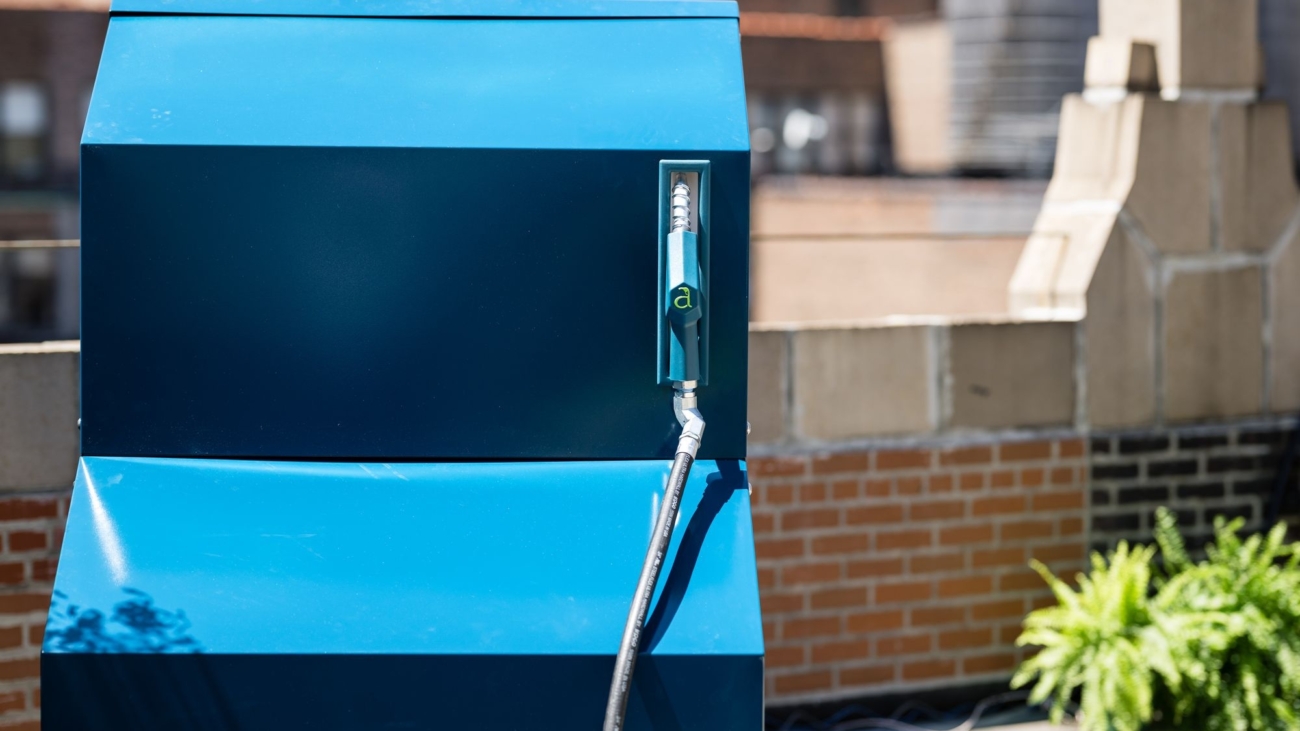
 

These days, it don’t take much to open the news and grimace, which is why shiny stuff in the Powersports industry is becoming an increasingly attractive read; today, the weekly offerings include the following: 

Harley-Davidson has given 73,000 square feet of their headquarters building over to a distillery. 
Honda is getting ready to give us their CRF300F!
Both The National Powersports Dealer Association (NPDA) and Powersports Rep Association (PRA) are partnering up to increase ease of access and communications between dealer, rep and vendors.
Kove has given us a very nice 450RR to loook at; do you think they will release the inline-four to American shores?
Ducati has gone full Italian Renaissance with a fresh new livery scheme for Team Lenovo and their bikes. 

Let’s start with Harley’s new roommate, shall we?

Harley-Davidson HQ Makes Room for Distillery

A view of the Central Standard Craft Distillery’s new location in the Harley-Davidson headquarters. Media sourced from the Central Standard Craft Distillery.

Central Standard Craft Distillery to Take Up 73,000 Square Feet of HD Floor

Harley’s not had the easiest time of things, and while we weren’t even going to mention the way that their CEO, Jochen Seitz, stepped down after his contracted years were up. 

Financially, it is safe to say that Harley-Davidson is no longer making an easy surplus from its total winnings, as evidenced by the following gatherings about the ‘net: 

Global motorcycle shipments were down 17% in 2024 compared to 2023, while HDMC revenue was down 15%. (via RideApart).
Global retail sales of new motorcycles were down 7% for the full year 2024, with Q4 alone seeing a 15% decline globally and a 13% decline in North America (Via Harley-Davidson).
Q1 2025 consolidated revenue fell 23% year-over-year, and global retail sales dropped 21%, with North America declining 24% (Via Alnvest, May 1, 2025).

Whether the above is the catalyst for Harley’s new move to find a cool roomie for their headquarters is left to be seen, but we’re assuming it’s got something to do with it. 

A view of the Central Standard Craft Distillery’s new location in the Harley-Davidson headquarters. Media sourced from the Central Standard Craft Distillery.

According to RideApart, Central Standard Craft Distillery has purchased a substantial 73,000 square-foot section of Harley-Davidson’s historic main campus just outside of Milwaukee, with intentions to open their doors next Q3. The building was previously purchased along with land for a $20 million park – and, back in 2024, Jochen Zeitz told everyone that Harley-Davidson was “happy to have its campus as a community anchor,” imparting the following at the location’s ribbon-cutting ceremony:

“We could not be more proud to be part of the Near West Side, to be part of the community here in Milwaukee. A lot has changed in 120 years, but there’s one that hasn’t, that won’t change ever. And that is [that] Juneau Avenue is our home.”

– Jochen Zeitz, previous CEO, Harley-Davidson (Urban Milwaukee)

As for Central Standard Craft Distillery, they’re naturally quite pleased to have the space to themselves, having been quoted to have mentioned that the space will allow the distillery to grow 20 times their current size – not a small feat, nor a bad one, as evidenced by the Co-Founder’s comments below: 

“With this purchase, we’re excited to deepen our roots in the city we love, and to show our commitment and investment in the Milwaukee community.”

– Pat McQuillan, Co-Founder and President, Central Standard Craft Distillery (RideApart)

We’re super happy for both parties and will be keeping an eye on how Harley’s “next phase of investment at Juneau Avenue” plays out in the coming years. 

For a full deep dive into Harley-Davidson’s HQ movement, be sure to check out the following article on Urban Milwaukee: 

Harley-Davidson Reveals Plans for Future of Corporate Campus

Fast Filings: Honda Preps to Release CRF300F to America

Media sourced from Rust Sports.

Air-Cooled Model Slotted for 2026

Our beloved Big Red is officially readying to give us a new air-cooled machine!

Christened the 2026 CRF300F, this new trail bike recently showed up in filings from the California Air Resources Board (CARB), proving that an arrival to US markets is confirmed and now simply a matter of waiting until the unit is debuted. 

Based on these filings – sourced by the incomparable Dennis Chung at Motorcycle.com – we know the following: 

Honda’s upcoming CRF300F is fuelled by a 293cc fuel-injected, air-cooled single-cylinder engine.
Power is expected to be around 24 horsepower @ 7,500 rpm and 20 lb-ft. of torque @ 5,750 rpm.
The CRF300F will be paired to a six-speed gearbox with obligatories including a linked rear shock, a telescopic fork, and a single petal-style front brake disc.
Suggestions within the paperwork guess at the appearance of an oil cooler and a new aluminum swingarm.
Bodywork will remain classic to Honda’s CRF line. 

As for it’s placement within the industry, Honda’s incubating CRF300F will likely slide in right around where Honda currently shows off their lovely – but as yet not updated – CRF250F. 

Guessing the CRF300F’s debut is a bit tricky; Chung presumes that the machine will likely debut sometime this summer, while we wonder what Honda has coming for their attendance at EICMA. Thus far, we’ve seen the return of the CBR600RR to Big Red’s European lineup after a six-year hiatus (2023), and the arrival of a world-first high-performance V3 engine coupled with new EV models (2024).

Only time will tell!

For a full dive into the details of the incoming 2026 Honda CRF300F, be sure to head over to Motorcycle.com: 

New 2026 Honda CRF300F Coming to America

Industry Insider: PRA and NPDA Partner Up for the Ultimate Dealer-Vendor Connection

The PRA and NDPA. Media sourced from PRA.

“A Rising Tide Floats All Boats”

This article’s about to feature more acronyms than leather vests at Sturgis, so I’ll leave the following below: 

PRA = The Powersports Rep Association 

NPDA = National Powersports Dealer Association

For those of you unfamiliar with either of these organizations, think of the the Powersports Rep Association (PRA) like a helpful group specifically for the people who sell motorcycles, ATVs, side-by-sides, and all the gear to the dealerships. These guys are the ones that help our reps be awesome at their jobs and build trust across the whole powersports world. 

Then we have the NPDA. These gentlefolk are present to support, educate, and speak for powersports dealerships, helping them grow and making the whole industry more efficient financially beneficial for both the dealer and the rider looking to get a new machine into the garage. 

You can see why these two collaborating together is such a power move, yes? 

Excellent, and big congrats to both the PRA and the NPDA!

According to CycleNews, the partnership will allow talks between the PRA and NPDA; in sharing information about their processes and training methods, the customer’s experience will be that much better at a dealership because the quality of the service center’s… well, service… will be at an all-time high. 

Brilliant. 

Naturally, both sides of the deal are more than excited to see what this partnership brings about: 

“By advocating for a healthy and personal partnership between the dealer, rep and vendor, we will only strengthen our business relationship resulting in a more professional profitable powersports industry as a whole. We are better together.”

– Bob Kee, Chairman, the National Powersports Dealer Association (NPDA) (CycleNews)

“An open communication pathway directly from rep/brand to the dealer network is something this industry has been missing for some time. We vow to make the effort in this collaboration to provide premier certified sales professionals in the powersports industry that will align with the Dealerships’ values.”

– Industry Vet, Tim Calhoun, the he Powersports Rep Association (PRA) (CycleNews)

The wBW team is so incredibly excited for this partnership; more than ever before, manufacturers are in need of solid processes and services to help connect to the customer, especially considering the volatility of our current markets and the changes happening within our good Powersports industry. We will always support moves toward a unified and profitable future for riders countrywide.

For more details on this strategic new collaboration, be sure to read the full report on CycleNews:

PRA Partners With NPDA

Kove Refreshes 450RR for New Model Year

A view of Kove Moto’s 450RR. Media sourced from Kove Moto.

Panigale-Esque Looker Could Be Headed for American Markets

Want a Ducati Panigale, but you’re really just tied to the aesthetics? Kove might be able to help with that… that is, if they release their new inline-four beastie to US markets. 

According to a recent report from CycleWorld, Kove’s 450RR has appeared in type approval documents that prove Kove has a larger-capacity engine in mind for their entry-level supersport. We’re told that the cubic capacity will likely be somewhere between 600cc and 800cc, based on the 450RR’s design, and that the official result of all this hullaballoo will be debuted next year, sometime in 2026.

Anytime a bike brand from the Far Eastern Hemisphere makes a supersport bike and uprates the thing to a larger capacity, there is huge potential for the machine to enter markets with bigger bikes. In this case, our fingers are crossed for the Americas, as it would be fantastic to have the competitor to Kawasaki’s ZX-4RR on the same track.

On to the bike’s personality. Perks of owning one of these bad boys include Bologna-style winglets, hooded headlights, and a fully adjustable suspension set complete with radial-mount four-piston calipers. The whole thing is set to buzz about around 70 hp @ 13,000 rpm with 28.8 lb.-ft. of yank available @ 9000 rpm.

We can’t wait for this bike to be debuted so that we can see if there’s potential to bring a 450RR to American soil. 

For a detailed look at the Kove 450RR update and what it could mean for Western markets, be sure to check out the full article on CycleWorld: 

Updated Kove 450RR

Knights and Steeds: Ducati Decks Out MotoGP Lenovo Team in Italian Renaissance Leathers

A view of the “steeds” belonging to Francesco Bagnaia (#63) and Marc Márquez (#93) for Mugello. Media sourced from Ducati.

New Livery Inspires “Knights and Steeds” for Mugello

There’s one thing I haven’t really seen in the Powersports industry – like, ever – and that’s a collection that marries the concepts of motorcycles being similar to horses. In fairness, while both sport reasonably slim silhouettes on pavement and both show off horsepower (snort), the industries are nowhere near each other in similarity.

Perhaps this is why Ducati took such a heavy lean toward the “Italian Renaissance” when they premiered their brand-new livery set for their Ducati Lenovo MotoGP team. 

According to coverage from Ducati’s press release, our favorite Bologna-based bike brand has presented a truly tasty set of leathers for the Italian Grand Prix at Mugello. This ultra-special  livery celebrates the very essence of chivalry in a bygone era, with both Francesco Bagnaia (#63) and Marc Márquez (#93) transformed into what the press release calls “modern-day knights.”

Ducati’s move behind this collection is twofold: 

Ducati has a tendency of expressing themselves at their country’s grid effort at Mugello, with 2024’s “Azzurro” homage coming to mind. 
Merging technology and beauty is Ducati’s very reason for existing, and they feel the Renaissance is the perfect era to embody both those qualities in their ethos.

But back to the collection. 

Marc Márquez (#93) in their new Mugello livery. Media sourced from Ducati.

We’re told that this livery set was the responsibility – and pleasure – of renowned designer Aldo Drudi and historian Marcello Simonetta, who in turn pulled from two iconic Renaissance figures – Leonardo da Vinci, the genius, and Niccolò Machiavelli, the macabre “thinker” – by reinterpreting Leonardo’s famous “Ancient Captain” drawing by showing off a lion and a fox. This harkens the teaching’s of Machiavelli’s most prolific work, “The Prince”: to win, one needs both the strength of the lion and the cunning of the fox!

How very poetic, how utterly Ducati.

To see more details and the stunning imagery of this unique Renaissance-inspired livery, be sure to check out Ducati’s official press release: 

Renaissance genius and Ducati vision come together in a unique tribute for the Italian Grand Prix